Total Pageviews

Saturday, July 17, 2010

Back from Vacation and Metal Allergies


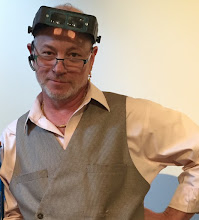
Well I'm back from vacation and somewhat rested. I think it was a good idea to take some time after my return from Martha's Vineyard off as well. It gave me a chance to ease back into things. As for the Vineyard we had some great (albeit hot) weather while we were there. It didn't rain at all. We had a wonderful stay at the bed and breakfast we stayed at: The Doctor's House and I would highly recommend it to anyone who wants to stay on the Vineyard. I think in the future I wouldn't stay quite as long. Neither Kathy nor myself are beach people so after about 4 days you run out of things to do there. But if you are into beaches there are plenty of pretty ones there. There were quite a few good restaurants we went to although it wasn't until near the end of the week that we found some decent bars as well. My idea of a decent bar may differ from most people's however as I look for my favorite drink, tequila, wherever I go. The picture is of me at the head of Aquinah on one end of the island. I think I look like I'm on vacation.

Now on to my topic of the day. I have been inundated lately (it seems) with people having allergic reactions to metals they are wearing. The reactions can range from mild irritation to serious scabbing. So let's discuss the causes of these problems.

The first thing is that many people confuse the problem they are having. People who wear wide bands often complain that they have a metal allergy but often it turns out that it is simply that things like soap, other cleaning agents, or dirt is collecting under the band (especially if there are bezel set stones on it in which case even more junk can collect in it) and it is this that is actually bothering people. If you seem to suddenly develop an allergy and you wear wide bands, I almost always recommend thorough cleanings (jewelers can do it better than you can but more on cleaning in a minute) first and then that you spend some time thinking about whether you have changed cleaning agents you are using, skin creams, perfumes etc. that may be impacting you because they are collecting under the band. If after doing this you are still having a problem then it may, in fact, be that you have a metal allergy.

Most people who have a metal allergy are in fact allergic to the alloys that are used when making gold into either 10k, 14k, 18k or 22k gold. The metal most people are actually allergic to is nickel. However, nickel is ONLY used in white gold. I routinely get people in who think nickel is used in yellow gold but it just isn't. As long as you are buying from reputable sources, nickel will never be used in making yellow golds. If you are having reactions to yellow gold then you are probably reacting to the copper or silver in the metal, BUT this is not always the case. Some people are allergic to gold as well. Platinum is the most hypo allergenic of metals on the market, but it is possible for someone to be allergic to platinum as well. Obviously if you are wearing base metals (costume jewelry) then the likelihood of being sensitive to it is very high.

Here is the other thing to remember: Our bodies change over time. You may not have been allergic to something when you were young but you may be as you get older. (Personally I never had allergies when I was young; now I can't make it through the spring without a lot of Claritin.) So if you have a reaction to wearing metal what do you do? Well if you are wearing white gold, I generally recommend that you stop and switch to platinum (although a good rhodium plating may help until the plating wears off) if you have to have a white metal. If you are wearing yellow gold, I generally encourage people to move up into higher karat golds. If you wear 10k (why anyone would want this metal I don't understand but that's just me I suppose) move up to 14k. If you wear 14k move up to 18k. If you're wearing 18k, and it is feasible for the design you want, move up to 22k (rings are not always durable enough in 22k gold). If none of these options work you may want to try platinum. For earrings there are hypoallergenic steel ear wires available if nothing else is working.

If none of these things help then you're just plain out of luck but it's worth trying them all first. If you are really enamored of white gold, some of us are now using a nickel free white gold which is colored with palladium (and zinc in some cases). Nickel in jewelry has actually been banned in a lot of the EU already and it would probably be a good thing if it was done here too, but don't count on it. Palladium white gold is more expensive than nickel white gold and that always means that manufacturers for the most part won't change their ways. I was actually somewhat instrumental in the reintroduction of palladium white gold into the US marketplace as a whole (due to my constant nagging of my gold supplier about how problematic the nickel white gold was to work with). I only sell 18k palladium white gold in my shop.

As for cleaning your jewelry at home here are my recommendations (because it always looks better and there is less of a risk of reaction to gunk collecting underneath rings). 1) Do NOT boil your jewelry. There is far too much of a risk of forgetting about it and returning to find your stones completely cooked after the water dries up. And yes, you can burn your diamonds. 2) I generally do NOT recommend home ultrasonic units. First of all they aren't as good as the commercial ones jewelers use. Secondly stones can break in them. 3) Do NOT use any of the commercially available jewelry cleaners that are profligate in the marketplace. I find they do more harm than good. 4) What you can do is take some ammonia (plain grocery store ammonia), Ivory Liquid (dish detergent) and warm water and mix it together. Any proportions will work, although obviously the more ammonia in the mixture the stronger it is. You can soak stuff in it for awhile and then use a soft toothbrush to scrub the stones, especially underneath them. This is where most of the dirt collects and it impacts the way a stone looks tremendously. Always scrub with plain water afterwards.

I would still encourage you to get your jewelry cleaned professionally at least twice a year. If you own a piece of jewelry from Daniel R. Spirer Jewelers I offer lifetime free cleaning on my work (and I'll do up to 6 pieces I didn't make for free too if you own something of mine----there are a few exceptions to this as some pieces can be major events and a charge will apply). Many other jewelers will clean jewelry for free as well, or have minimal charges (I charge $5 per piece---again with some exceptions---if the jewelry isn't mine). The advantage of bringing it to a jeweler however is that they can also check all the stone settings at the same time. You wouldn't ever drive your car for 2 0r 3 years without having a check up. Don't drive your jewelry for that long either without having a check up.

Wednesday, June 30, 2010

Vacation Time


First of all the new turquoise and diamond earrings I posted a picture of in my last post have sold already. It seems if you want my new stuff you have to jump on it quickly. So here is a picture of a new sapphire ring. Unfortunately (despite the fact that I didn't take the picture), the sapphire didn't read well in this shot. (Okay addendendum on 7/1---This is a new version of the picture---color reads a bit better but it's still prettier than this.) I can assure you that it looks a whole lot better in real life. So look at the design and imagine a really stunning, beautiful dark blue sapphire in it.


I am taking a muchly needed vacation for 10 days starting on July 6. Hopefully it will provide some refreshment for my creative spirit (I'm going to the Vineyard for part of it). I should come back with a lot of ideas for waves. Wait a minute, I already do waves in my jewelry. Oh well. I'll find some inspiration somewhere. This will be my final posting until I return.

Thursday, June 24, 2010

How About Some Feedback


I know that some people out there are actually reading my blog because I routinely get customers in who said they read it. But honestly guys, I'd really love some feedback. Any and all comments are appreciated. Is there something you've found helpful? Is there a posting you hated? Is there something you'd like me to write about? Is there something you don't want me to write about? Would you like to see more pictures of something? Please let me know. And become a follower too! By the way I also can be found on Facebook and I have a fan page for my store as well. Join up and become a fan!


Pictured above are some new 18k gold, turquoise and diamond earrings.

Tuesday, June 22, 2010

Mokume Gane


I've spent some time recently looking over some other jeweler's blogs and once again had my feelings reinforced about what I don't want my blog to become. Almost universally, they are discussions of a piece recently made, usually with pictures of the work in progress. Now this is all well and good. I'm sure that a lot of people are intrigued by how jewelry is made and it's great self promotion to show what goes into making the items we produce as jewelers. But generally speaking, it's not the direction I like to go in. I prefer to talk about my MOTIVATION for making a piece. I also like to talk about subjects that I think will help my customers buy any piece of jewelry (not just mine). But today I'm going to throw all that out the window and talk about one of the techniques I use to actually make some of my pieces. Why? Because I said I would in my last posting.


Mokume gane is a Japanese metal layering technique that has been used for thousands of years in making both jewelry and ornamental objects. Mokume means woodgrain and gane means metal so the description is woodgrain metal. That is exactly what a lot of it can look like. It used to be that almost all mokume gane work was done with a variety of less expensive metals, copper, silver and a number of oddball alloys that the Japanese had developed. More recently it has been done with precious metals. There are some jewelers who specialize in mokume gane and do some absolutely stunning things with it. They have taken the technique to whole new levels. Using ovens to carefully bond their metals together over long periods of time, they have come up with some new ways of using mokume and a variety of new looks for it. With modern advances in technology, their ability to produce perfect billets of mixed metals to work with is impressive.


However I don't want to spend my entire life doing one process. As a matter of fact, one of the reasons I can please so many different types of customers is because I work in a variety of styles. While some of my work is immediately recognizable as mine, a lot of it is just nice jewelry. And that's what I like to do. I'd be bored to tears if all I did was one particular technique. So I leave that for the other jewelers who specialize in it, but I do have a particular mokume that I enjoy making and that I produce routinely.


Basically what you do in mokume gane is create a piece of metal with a large number of layers of different colors of metal and then peel away parts of it to see the layers underneath. I do this by starting with a piece of my special 22k yellow gold mix and a piece of the 18k palladium white gold I use. I've found these two metals fuse together better than some others, given the conditions I'm working in. I then fuse the two layers together using my torch in a process in which I heat the two metals until they are almost liquid and they actually fuse together. Then I cut the piece in half and fuse them again. I do this until I get either 16 layers or 32 layers of metal. This metal is then rolled down (in a mill) until it is fairly thin. I then take a dapping die (a small tool I use with a hammer that has a ball on the end) and punch out a series of rows of holes (they don't go all the way through) in the metal. The piece is then flipped over and ground off on the top. This allows the different layers to show through.


I really enjoy making mokume gane because it involves a lot of torch work (I admit, I have somewhat of a fascination with working with a lot of fire) and it is just generally fun for me to do. It's technically advanced (trying to get the metal to fuse properly with a torch is tricky---most mokume today is produced in controlled ovens), it's always a little different and I can do some neat things with the results.


In the three ring picture only the top ring is mokume gane. That is a 32 layer mix. The earrings are a 16 layer mix.

Saturday, June 5, 2010

Appraisals 103


If you read my last two posts on appraisals you should have noted that I said that appraisals are a legal document. If you go into a jewelry store and show a clerk a piece you own and ask what is this worth and they scribble something on a piece of paper, or even verbally state a value, that is in effect a legal document that could be used in a court of law in the event of a fight with an insurance company over value, or in the event of a fight between heirs. The problem is that someone who glances at something briefly and then gives you an on the spot value, but doesn't charge you anything, is doing you a disservice because the statement won't be accurate and is risking being dragged into court over it with no real backup for their statement of value.


If you want a legitimate appraisal you have to be willing to pay for it (although a point of sale insurance appraisal may be provided free by the jeweler you are purchasing the piece from). Fees for appraisers will vary but you should NOT work with anyone who charges by the value of the pieces appraised. This used to be common practice, although it isn't done as much anymore, but the problem with it is that it tends to be better for the appraiser to overvalue the jewelry because they get paid more. This type of fee is considered unethical by all appraisal organizations. Beyond that, however, some appraisers charge by the hour (I do), some will charge by the piece, and some may base a price on the entire collection they are dealing with. In general, you can assume that free appraisals (excluding point of sale insurance appraisals) are worth exactly what you paid for them: nothing.


Anyone can actually write up a jewelry appraisal. There are no licensing boards per se. There are various appraisal organizations which people can belong to and require their members to pass certain tests and while it is nice to get someone with this background it isn't actually critical. Assuming the jeweler doing your appraisal is a Graduate Gemologist (or the equivalent), has taken courses on appropriate appraisal practices and has a good grasp on the marketplace in general (not just what their store sells things for), you should be able to get a decent appraisal. I don't belong to any appraisal organizations (time constraints more than anything prohibit it, plus I'd rather be making jewelry than appraising it) but I do have my Graduate Gemologist degree from the Gemological Institute of America, I routinely take refresher courses in gemstone identification, and I have completed numerous courses on appraising over the years. Additionally I read a half dozen trade magazines every month, both for current information on appraisal practices and for pricing information. I also have been doing appraisals for long enough that I know when something is out of my range of expertise and I will refer people accordingly.


So when you go to get an appraisal I recommend the following:


1) Look for someone with the proper credentials

2) Look for someone who will take the time to do a proper appraisal. Grading diamonds properly takes some time. The proper identification of gemstones and metals takes time. The accurate write up of these things takes some time.

3)Do not use someone who has a vested interest in buying whatever is being appraised. If you have an antiques dealer buying an estate from you, they should NOT be the ones doing the appraisal (no matter what kind of appraisal). If the jeweler writes an appraisal for you and then makes an offer to buy the piece from you based on that, I would think long and hard about having another jeweler value it.

4) Work with someone you trust. If you don't feel good about leaving your merchandise with them don't use them.

5) Do expect your jewelry to come back looking a little different. Any appraiser worth working with has to thoroughly clean any items being appraised. Suddenly the big inclusion in the center of the diamond that you never saw before is readily apparent because the diamond is clean (possibly for the first time in decades).


It is helpful if you have old documentation on pieces to bring this along when you meet with an appraiser. A good appraiser won't use another appraiser's or a jeweler's statements to write up their own appraisal, but sometimes point of sale appraisals are helpful because they have accurate stone weights listed (something that is hard to get once a stone is set into a piece).
Hopefully this series will help anyone looking into appraising some of their jewelry.