Total Pageviews

Wednesday, May 23, 2012

More on Selling Your Jewelry


Despite the improving economy I can't seem to get through a day without more inquiries about selling off jewelry. Mind you, a good deal of these discussions are happening now because the baby boomer group has reached the point where their parents are dying or simply beginning to pass on their estates so it's not all about the economy. In many cases estates are being passed down and the jewelry is simply too dated (read: ugly) to be worn today, too worn to be worn today (I like that phrasing) or doesn't fit into the recipients life style (remember I'm in Cambridge where ostentatious displays of wealth are not always looked upon in a kindly manner). So I'm going to revisit this topic in today's posting with a review of the information I've given before on this and some new information as well.

What is it that you have?

The first issue (especially in the case of inheriting jewelry) is figuring out what you have and, if you want to get rid of it, the best way to do so. In many cases, basically what you have in your hands is a pile of gold that really can only be disposed of by scrapping it. Because of how much stuff is being sold off today, small stones (diamonds included) are rarely going to add anything at all to what you are going to be paid unless they are exceptional. There are more loose, low quality, small gems flooding the marketplace today then ever before, so much so that to some extent jewelers just send the whole pieces they buy, stones included, into the refiners to be burned out (and usually ruined) without even removing the stones as it isn't worth their time to bother. So unless you know your parents were collectors of fine goods, or there was some significant wealth in the family history, or if you're selling something you bought and you know it was a very high quality piece, I generally just recommend that you scrap the metal you have. If you are looking for money I always recommend you take it to two or three jewelers and see what they offer and then take the best offer. Daniel R. Spirer Jewelers doesn't buy gold outright but I will take it in trade towards work being done or pieces bought out of my case and because gold has been so high it is a good time to do something like this. Gold, however, has been on a gradual downwards swing lately so I would say if you're thinking about doing something like this now is the time to do it.

When you have something good what do you do with it?

So now let's say that you actually have a really nice, larger diamond and you want to know what to do with it. In my opinion the most amount of value is always retained in these by keeping and using the stone in your own pieces. This is because when you go to sell a piece you are basically selling it to someone for below wholesale as they are going to need to resell it to a customer and they aren't going to pay what they would pay their regular supplier for it. (There is more information on this in earlier posts---check my blog directory.) However for some people it isn't an option to keep the stone---either they need the money from it, or an estate is being broken up and they need money to be able to do that (cutting diamonds into small pieces is not generally recommended as a way to break up the inheritance (-; ), or it simply doesn't fit into their lifestyle and they would rather have the money to invest (gemstones should NOT be considered an investment) or use.

In these cases you have a couple of options available to you. One is to simply do the same thing as I recommend with gold and show the piece(s) to a few jewelers and see what they offer. If you don't like what they offer you don't have to take it. The second option is to try to sell it on Ebay or a similar venue. I do NOT recommend you sell anything privately if it involves you meeting with people you do not know. This is an extremely dangerous idea. The third option is to see if a jeweler will sell it for you. Daniel R. Spirer Jewelers will do this for customers assuming that the piece has a high enough value. I work on a commission basis when I do this so if you come to me with a stone worth a couple of hundred dollars I won't help you but if you have something of significant value that it will be profitable for me to spend some time on trying to sell for you I am happy to try to help you. The fourth option is to give it to an auction house to sell.

Auction Houses

Auction houses can be a good option for you if you have a group of pieces that are true antiques, or that are by known designers or that have a number of significant gemstones in them. They may, or may not, be a good option for a single large stone. If you have something truly exceptional, either a very large diamond, or a very high quality, very large,diamond (where you may be looking in the over $50,000 range) it might be worthwhile to sell through an auction house. However the diamond market everywhere is fairly standard, and runs on relatively small margins, so you have to weigh the costs involved in selling through auction. An auction house charges a premium on the sale to the buyer and a commission on the sale to the seller. (I confess to having not realized this until just recently. I was always under the impression that only the buyer paid the premium but as it turns out they will take something from both ends.) So the question becomes a little more complex on a single stone. Many of the buyers are in the trade and looking to resell the stones (and are often looking for deals). Additionally everything they buy carries a premium of anywhere from 15-20% so they have to factor that into what they will pay. Then you will also pay a commission which will reduce your yield. So if it is a piece in the hundreds of thousands it might be a good bet as those types of pieces are hard to sell outside of the auction world but on lower value goods it may be a wash in terms of which approach would yield the most. With true antiques however I believe an auction house is always the way to go. You can usually set minimums that the pieces can sell for with an auction house so you aren't obligated to sell in this case either if they aren't met. However you should expect the auction house to guide you as to what is a reasonable minimum bid for a piece and you should listen to their advice. The better ones all have far more experience in this then you do. I had a customer who recently sold a piece through auction. It was a very unusual link bracelet with pale blue, very flat but very large sapphires in each link. The auction house thought she would get about $5000 for it but it ended up going for $14,000. She netted about $12,000. This piece however (I saw it and had recommended she take it to auction) was a very unusual piece. If the sapphires had been removed and someone attempted to sell them off as they were no one would have paid much of anything for them because of the color and the large number of inclusions in them. But as an antique, and somewhat unique piece as a whole, it had significantly more value than it might have otherwise.

As with most things, there are no easy answers when it comes to this, and what I have said here is only a general guide for what you might be able to do. It does all come down to what you have and whether it truly has enough value. A somewhat generic, mid quality range 1 ct. diamond will yield something but I would tend to encourage you to just show something like that to a couple of jewelers. A 2 ct. mid to high quality range diamond I would encourage you to check with jewelers or work with someone like me who works on commission. A 5 ct. high quality diamond should most likely go to auction. Hope this helps a bit!

The 22k gold ring at the top is my wife's and has a 1.77 ct. ideal cut diamond in it.

Wednesday, May 9, 2012


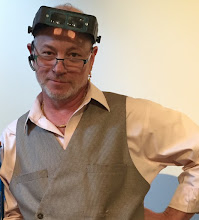
On my April 28, 2012 post I mentioned that I had been a jeweler for so long that I had done pretty much everything at one time or another. For those of you who didn't believe me I present the following two pictures of me taken in 1973. They were taken in the workshop of the jeweler I originally trained under. The gentleman behind me in one of them was another employee, and an exceedingly talented South American trained jeweler. In the school he went to they would spend an entire year learning each technique; one year soldering, one year piercing (sawing), one year forging (hammering), etc. They would work 9-10 hour days every day while training and all of their work was done while standing at a bench. Sounds pretty excessive but the guy was one of the best trained jewelers I have ever met.

For those of you interested here's a link to what was going on in 1973: http://www.thepeoplehistory.com/1973.html so you can get some idea of how things looked back then. Gold, incidentally averaged about $100/oz. in 1973. Today it's approximately $1600/oz. There were no personal computers, no laptops, no cell phones and NO ONE was writing blogs! And, as it happens, I also had a lot more hair.

Saturday, May 5, 2012

On Reading for Content and How Deceitful Can a Company Be?


I had a young gentleman in the other day asking about a custom engagement ring and he wanted to know if I sold, or would work with, synthetic diamonds in my pieces. For those of you who are regular readers you know that I recently set a synthetic white diamond in a piece and that I have also set synthetic green diamonds made from a pets' ashes. So I told him that I wouldn't sell him a synthetic diamond but I would be happy to set one that he brought to me. I asked him how large of a stone he was thinking of and he mentioned a size that I know to still be pretty much unavailable in white diamonds so I asked him who he was trying to purchase it from. At this point in time there are basically only two synthetic diamonds producers making white synthetic diamonds of any size and the name he mentioned wasn't either one of them. It was an online company that had a pretty splashy page and lots of jewelry on it, but when the guy mentioned the type and size of stone he was looking at on the site, and I went to it the price was ridiculously low for a synthetic diamond. A synthetic diamond takes a lot of energy to produce and the initial investment in the machinery used to produce them is huge so I knew that no one was going to be selling them for these prices.

When I looked a little closer I realized the company actually said they were diamond SIMULANTS not synthetics but it was in and among all of the information that included the fact that they sold synthetic sapphires and other types of gem materials (and when you do a search for synthetic diamonds on line they show up almost immediately). Synthetics, in case you haven't read enough of my articles, duplicate the natural in all physical properties except that they are man made. SIMULANTS are another material altogether that is made to look like the natural stones they are trying to duplicate (cubic zirconia is probably the best known of these). The company also proceeded to talk about their special processes (in this case a supposedly proprietary coating on the surface of the material they were using) that made their simulants "almost as hard" as natural diamonds and that it also made them at least as brilliant as diamonds. They revealed that their coating had, among other things, corundum (i.e. sapphire) in it. They also went on to say that the coating made the stones appearance rival what was considered to be the best color in a diamond, "blue-white" and that it also was fluorescent, thereby creating another "highly valued" characteristic of the "finest" diamonds. I was so disgusted at this point that I couldn't bear to keep reading anymore.

So how many things are wrong with all of these statements? Well first of all, let's talk about hardness. The Mohs hardness scale is a scale of 1 to 10 in which a material from the next higher number can scratch material at any number beneath it. But a stone that is 5 on the scale is not five times harder than a stone that is 1 on the scale. It can just scratch all of the materials below 5. Sapphire is a 9 on the scale. Diamond is a 10 on the scale. But a diamond is actually 140 times harder than a sapphire! So if their coating is made primarily from sapphire material, diamond is still 140 times harder than their coating. That is not "almost as hard". Secondly the use of blue-white as a descriptive term for diamonds was so horrendously misused in the past that the Federal Trade Commission banned its use as a term that can be used in association with diamonds. The stone is either white and assigned a legitimate color grade, or it is a fancy blue color at which point you are dealing with a completely different type of diamond. And third, while some fluorescence is considered acceptable in a diamond, strong fluorescence is considered detrimental and will drive the price down on a diamond. And as if this isn't enough please don't get me started on how coatings never hold up on stones subject to daily wear and tear.

Now I have no problem with jewelers selling synthetic stones or simulants. I understand many people don't have the resources to pay for the real thing but they still want something pretty to wear. But I do have a problem when the company selling the items so horrendously confuses, misrepresents their material and makes statements that are so blatantly wrong in their desire to confuse the customer. There is, IMHO, no excuse for this kind of behavior on the part of these types of companies. But some of it does come down to a customer doing their research and reading carefully for content. While I wouldn't expect most people to know some of the things I have brought here, the use of the term simulated should be a warning flag when you are looking for something you think is synthetic. And if you are looking for something like an engagement ring it doesn't hurt to do a little thorough research first.

The pair of rings at the top are a pair I recently custom made for a couple who renewed their vows to stay engaged for at least another 25 years in my store recently. I love this town! They are made of a base of 18k palladium white gold with 18k yellow gold on top, natural color Umba Valley orange sapphires, diamonds and fancy sapphire accents.

Saturday, April 28, 2012

Old Techniques Brought Back to Life

I've been making jewelry for so long that I have done pretty much everything in the field at one time or another.  But I have also had certain techniques that I have done in the past and then they get pushed aside, either because I just haven't been moved in that direction, or I've forgotten about it, or I've changed how I do certain things, or just because I haven't gotten around to it.  Anyway I used to make jewelry with a certain technique that I kind of came up with on my own.  I'm not sure it's completely unique to me but I haven't seen it out there, at least not done in the way that I do it.  I recently had a customer who came in who had lost an earring that had this particular technique on it and she wanted a new pair of earrings with the same feeling, although a different shape.  I usually call it my 22k gold dust effect and that is kind of what it is.

Some of you may know that I use a special, often hand produced, 22k gold alloy that the recipe for was originally given to me by a school that taught antique jewelry techniques called the Kulicke Stark Academy of Jewelry Arts.  (I believe Jean Stark, one of the original owners is still producing her granulated jewelry.)  However, over the years I have made some slight personal alterations to achieve the effects that I want (mostly that I actually enrich it to a point where it is more like a 22 1/2 kt. gold). One of the reasons I like to use this mix so much is because I can fuse it together (heat it until it almost melts to form a bond) instead of using solder.   This means that the pieces are often pure 22k but more importantly I can get a particularly nice granular finish on the metal that I can't achieve in any other way. It usually looks like it came straight out of an ancient tomb and it's a great effect.  Also it's always a challenge because bringing something up to almost the melting point without having the metal slump down, actually melt and lose all of the design is difficult and once you screw up there's no going back.  But I like to make jewelry because it is often a challenge. If I wanted to do something boring with my life I would have done something like dig holes all of my life (not that there's anything wrong with digging holes but it doesn't exactly challenge the brain cells).  But the dust effect I do is even a little trickier because basically what I do is file a bunch of my 22k gold so that I have a pile of 22k gold dust. Then I take a sheet of my 22k gold, either with or without previously fused decoration on it, and drop the dust on it. Then I have to heat it until it forms a bond with the solid metal below, again without having the whole thing melt into a blob, or in this case just melt into the solid piece beneath so that it doesn't look like I have done anything.

So I had the opportunity to produce a new piece using this technique for this customer and having been reminded of how nice it looks I'm going to try to get something out in the case soon too that has it.  The  picture above is a picture of the earrings I did for the customer. There are small diamonds in bezels in them as well.

The picture to the right is another custom pair of earrings I made for a different customer at the same time using their turquoise beads.

Thursday, April 19, 2012

Updated Blog Directory


I have updated my blog directory to include a new section of some of my favorite posts. For those of you new to my blog there is a link on the right side of the page to my blog directory article which is a handy way to get to the subject matter you want a little quicker. Unfortunately this took me so much time to do that I have no time left to write a new article so I'll save that for another day. The ruby and diamond earrings above are a new design that I just did recently. There has been a recent push to eliminate the ban on importation of ruby material from Burma recently due to their improving civil rights situation. It would be nice if this happened as fine Burmese ruby material has gotten harder to come by because of the ban.