Total Pageviews

Wednesday, April 21, 2010

Jewelry Designers; Designer Jewelry


I happened to be looking through one of the latest Nieman Marcus catalogs a few days ago. I routinely look through them because a) we happen to get them, b) I have a little thing for shoes (as those of you who have seen pieces of mine with shoes in them can attest to) and c) because I like to see what is going on in the high end retail jewelry world. Nieman Marcus is heavily into "designer jewelers".


What, you might ask are "designer jewelers" as opposed to jewelry designers? "Designer jewelers" are people who may have started out making their own jewelry but inevitably get picked up by some big companies (either through direct marketing by savvy partners or by chance) and are forced into producing large quantities of jewelry. They routinely transfer all of their production overseas because the labor is so much cheaper and once they get caught up in the cycle that is necessary to continue to promote and sell their product, they routinely look for ways to increase the profit margins so that they can continue to grow and expand and can afford to sell their product to places like NM and everyone can make a lot of money. "Designer jewelers" are obligated to come up with new lines every season (much as clothing designers do) and there is a constant pressure to produce a new look that is still consistent with whatever their look was to begin with.


Hey, more power to them if they can do this but if you watch the progression of most of these designers you will see that they gradually dumb down their designs to the point that a) they aren't really very interesting and b) they look just like everyone else's work. It's interesting, too, how so many of them work in lockstep with each other. Remember a few years ago when circle pins came back into vogue? It was astounding to me how all of the big name "designer jewelers" came out, at exactly the same time, with a variation on a circle pin.


But as most of us know people tend to be like lemmings and follow anyone who happens to be leading at the moment so if everyone else owns a boring design, they have to have it too. I don't object to this. If you want to spend your money on something that looks like what everyone else has that's fine. What I DO object to however, is the use of cheaper and cheaper materials that "designer jewelers" are forced to use in order to keep their price points where they want them. This is particularly becoming apparent now that gold prices have gone up so much. "Designer jewelers" have routinely used low end gem materials (usually in large sizes) to accomplish this. There is a reason so many of them use large amethyst, citrine, peridot, etc. in their designs. But it seems that every year they take it to a new level.


A few years ago, rough diamonds became the rage. Now mind you, I made up pieces with diamond crystals more than 20 years ago, but they were just fun pieces, not meant to be serious jewelry (one was a space capsule that parts of came off to make into earrings). Now, however, they want you to think that they have value. The reality is that any diamond crystal of a high enough quality is going to be cut into a finished diamond. There is simply too much value there to sell them as uncut stones. So the uncut diamonds that are available are inevitably junk. Some "designer jewelers" are using large rose cut or partially cut diamonds in their jewelry that 5 years ago were considered to be industrial grade bort.


But what has set me off on this latest rant is a piece shown in the latest NM catalog that simply stunned me. They had an advertisement for a designer named Yvel in which is shown a chain (a basic commercial chain) that has bezel set stones scattered throughout. The description of the stones is that they are "natural multi color Sapphires". Technically, they probably are sapphires. But you could have used pebbles found on the beach and they probably would have looked nicer and they definitely would have had as much value because the "sapphires" (and I use this term loosely) are simply junk. They are so included that they are opaque (fine if it's a star sapphire but otherwise pretty useless), they have been badly faceted (why put a lot of facets on a stone that will never sparkle?) and are something that if you took them out of the "designer jewelry" would have absolutely no value! I would not give anyone 50 cents for any of the stones shown, nor would any jeweler who buys stones and gold from the public.


Now it would be one thing if something like this cost $50 and you could go home with a fun new bauble. Or if the pieces were truly a piece of art that incorporated an unusual design. But that isn't the case (especially in this case when the basic design has been around for a few thousand years). These items all sell for top dollar and the value is simply not realistic. It has nothing to do with any actual inherent value in the piece. Now I'm not saying that if you pay retail for something (please read my post on selling your gems) that you will get that back if you go to resell it. But you SHOULD be able to get something more than the scrap value for the gold. I can assure you that in a piece like the one shown there is no way that would happen. In reality the "designer jeweler" probably also paid next to nothing for the "gems" included in the piece.


So the next time you're thinking about buying a nice new piece of jewelry take a minute and think about whether it's something that will always have some value and if it's something you would want your children to own!

Saturday, April 3, 2010

Shop Local or Bricks and Mortar vs. Internet


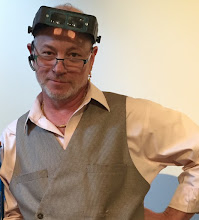
This past weekend my wife and I took another trip to our favorite shopping mecca, New York City. It was my birthday and it gave us a chance to visit with our older son, my parents and my sister and my new niece. This is a picture of my niece and I on this trip. But this isn't really about how cute she is (although she is) but about part of the trip and what some of it means in the grand scheme of things.


I believe in a prior post I mentioned another trip to New York and a store we happened to particularly like there: Takashimaya. This is a sort of Japanese department store although it is a fairly limited chain (I believe there is only one in the States). My wife and I have always loved to go there because they have a great little restaurant in the basement and it was always a little like walking through a museum when you would walk through the store. They also managed to cover just about everything you would see in a normal department store (clothes, jewelry, furnishings, bedding, florist, perfumes, etc.) but in a relatively small amount of space. It was seven floors but each floor was fairly small. They always had a heavy bent toward Japanese products but also managed to carry clothing and jewelry designers that were more localized. Their prices were always fairly high, but they also offered a unique product, always flawlessly displayed (read: attention to detail) and their staff was always quite helpful (and over the years we consistently saw many of the same people). One of the comments I always heard from people who had been there when I would talk about the store is how much they loved looking at everything but because it was expensive they wouldn't actually buy anything.


So it was much to our dismay that when we eating in their restaurant on this trip that we overheard a waitress (who remembered that I always drank coffee when we came, by the way) tell another customer that the store was closing (in June probably). It turns out that the employees had just been told this on the Thursday before we arrived in New York. The company was closing the store and selling the building. We were told that it was because sales just simply hadn't been good enough during the latest recession and that they were losing money. Mind you, my wife and I can't be blamed for this because we always spent money there when we went on our trips to New York. But apparently there were just too many of those lookers and not enough who would actually buy.


So what does all of this have to do with Daniel R. Spirer Jewelers? Allow me to reprint an email I recently got here:


"Hi Daniel,

I am not a "diamond person." Or at least that's what I thought until I saw one of your ads, months ago, in the Boston Globe. The rings pictured there were so beautiful that I cut out the picture, just to save. Today, I happened upon the picture again and finally visited your website. I am in awe. Your work is the most beautiful, fanciful, and creative jewelry I've ever seen.

I'm an aged hippie, turning 60 later this month, and never thought about diamonds until my son shopped for an engagement ring for his girlfriend, out in LA. The ring he settled on is beautiful, but I feel sad that he didn't find your site first.

At any rate, while I'm not in a financial position to actually own one of your rings, I wanted to let you know how impressed I am, and how their beauty, just viewed online, has affected me."


Trust me I love to get accolades from people who love what I do, BUT the reality is that I don't stay in business because of accolades. I stay in business because people buy my product. My product is unique, like Takashimaya's (in some ways more so because they are all my designs), but it is also more expensive than many other jewelry stores. I get many couples in who are looking for wedding bands and the women are looking for something unique but the gents are often looking for something simple. I offer an extensive line of basic wedding bands and they are generally better made than most others, usually made from recycled metals and they are actually hand made by ME. However they are routinely more expensive than something commercially made by machine (or overseas) that you could find on the Internet or at some mall chain jewelry store.


So the question then becomes, why should you buy it from me or another small local jeweler? Well, in my mind, the first and foremost reason is that if you want people like me to be around for a long time then you need to help support us. When you buy from a small local vendor you are supporting your neighborhood and you are helping them to stay in business. You are also keeping your hard earned dollars working in your community and not having it all go overseas to some other country. How would you really feel if you woke up one day and there was no more jeweler, hardware store, gift shop, etc. in your neighborhood? If there was no way that you could actually touch and feel the product you wanted to buy? If there was no way to try on a dozen different outfits to see which one truly looked better on you?


One of the things a lot of people are doing now is going into their local shops, being educated about what they want by the people in these shops and then going on line and buying whatever it is they have decided on and learned about from their local shop. Sooner or later though, those local shops won't be there anymore to help you with this if you don't actually shop there.


The other thing you will never get online is the personalized service that you can get from a local store. I routinely get people in with rings they have just purchased online that are the wrong size. Because of how hard it is to ship everything back and forth they end up paying me (a service I provide to my customers for free at any time) to have rings resized that they shouldn't have to.


Or they bring in the stuff and it's falling apart, because online you can never truly see if the merchandise is well made, and they have to spend a lot of money with me (sometimes as much as they paid for the pieces to begin with) to have it fixed. They are often forced to do this because jewelry is not really just about the actual metal and stones---it's about what it means. If you've been given an engagement ring by your intended, you usually don't want to give it up even if it was poorly made to begin with, because it's all about the meaning behind it.


Unfortunately, in this country, it is too often about the price and not much else. I was amused by the fact that as soon as the economy nosedived suddenly most people didn't actually care so much about environmental concerns. And suddenly WalMart wasn't the evil demon that it had been before. The problem however is that often some of the economic downturn is a self actualized event. Because everyone suddenly thought they should spend less, they did, which actually made the economy worse than it would have been. Now I'm not advocating that everyone go out and spend money they don't have wantonly. But I think everyone should take more into consideration than just simply the price. If you save a hundred dollars but in the process you end up driving a local shop out of business (which you may need later for those repairs!) what are you really saving?

Saturday, March 13, 2010

Watermelon Tourmaline


Two posts in two days. You'd think I was inspired by the great movie I watched last night: Julie and Julia. Anyone interested in food will love it. But that's not really why I'm posting again today. Over the years I have worked with any number of both traditional and nontraditional gem materials. One of my favorite stones is tourmaline. Coming in a wide variety of colors it offers something for everyone. While not a super durable gem material (despite giving my wife one for her engagement ring I actually don't recommend it for every day wear), it can be so stunningly beautiful that it's hard NOT to put it out in all types of jewelry.


One of the really cool things about tourmaline is that crystals are routinely found that have more than one color in them. It can occur with one color on one end and another on the other, or even more interestingly, with one color in the center and another one on the outside. The crystals that occur with one color inside another are often cut into what is known as watermelon tourmaline (because often it is pink in the center and green on the outside). These are slices of the crystal, with the original rough crystal edge left on but polished on the front and back. They can be quite beautiful and they are certainly one of the most interesting gems I get to work with. Unfortunately, most of the time, high quality tourmaline crystals (those that have few to no inclusions) are cut into faceted stones, or for slightly more included stones into cabochon cut stones. This, unfortunately, means that most watermelon tourmaline slices are fairly heavily included, and often the colors are a bit muddy (again better colors will be cut into faceted or cabochon material).


Years ago, however, my primary gemstone suppliers (Jimmy and Pat) came into some material that was just stunning, both in color and clarity. While not completely free of inclusions (they never are) they were cleaner than most and the colors were quite intense. One of the first major pieces I made for my wife was a pair of earrings using some of these watermelon tourmalines with dangling tourmaline cabochons. At the time, Jimmy claimed that he would be able to continue getting material of this caliber but after a year or two the availability dried up. Since I had actually bought a fair amount of the material I didn't actually need more for quite some time. Over the years Jimmy and Pat changed directions somewhat too and weren't exactly focusing on this type of material.


Recently however, in an attempt to get out some new designs, I started thinking about this material again. I haven't seen any decent watermelon tourmaline in years. So I called Pat up and I said, you know Jimmy swore to me he could get more of this material but I haven't seen any in years. Surprisingly she actually remembered the material and where it came from and she went back to her German supplier who had originally supplied it to them. Lo and behold, the cutter had actually culled a few better ones and stashed them in his safe which he pulled out and offered to them. And they offered them to me. And I bought them all. The picture at the top is a picture of the five pairs that I got. If you've ever admired these stones, or had a desire for something different, these are probably the best that are out there right now. Come by and see them in person if you get some time. For a picture of a pair of earrings I made years ago with the same material see here.

Friday, March 12, 2010

Selling Your Gold for Scrap


Inquiries on selling your gold are continuing to come in on a daily basis so let me address this issue for those of you interested in doing this. First of all, yes this is actually a good time for you to sell old gold that you're not wearing anymore. Gold is at an all time high (although I believe, when adjusted for inflation it is still not as high as it has been in the past). Platinum is fairly high as well although off of it's peak of $2400/oz that it hit about a year ago. I'm not recommending that you sell things just because gold is at a high. If you wear and enjoy the piece and money isn't critical, I wouldn't recommend it. But if you have old pieces you no longer use it is a better time than most to sell.


However there are a lot of things to understand about the process and what's involved. First of all most of the jewelry you own is either 14k gold or 18k gold (if you've bought from me you may have something in 22k gold or if it comes from Asia or India it may also be high karat). Karat is a statement of purity. 24k gold is pure gold. 18k gold is 75% pure gold and 25% alloys (usually copper and silver). 14k gold is 58.5% pure gold and the balance is alloys. (Incidentally, "karat" is different from "carat" which is a weight measurement for gemstones, although the two spellings are routinely confused.) So even if you bought a piece that was sold as "solid" gold, it doesn't mean it's pure gold, just that it is not something that is plated or gold filled. So even if you have an ounce of gold jewelry (and I'll get to that weight issue in a minute) you don't own an ounce of pure gold that is currently worth about $1100/oz. If it's all 18k gold you only have 3/4 of an ounce of pure gold. If it's all 14k gold it's only a little more than half an ounce.


The next problem is that if you're weighing your gold at home on a normal scale you're not actually weighing in the right weight system (please try to say that phrase "weighing in the right weight system" three times fast). Gold is weighed in troy ounces. Your scales weigh in avoir ounces. If you have one avoir ounce of gold you actually only have .91146 troy ounces. So you take your one ounce of 18k gold that is actually only 3/4 ounce of pure gold and multiply the .75 times .91146. You'll see that you get only .6835 ounces of pure gold that you will actually get paid for.


Okay so now let's say you take your 1 ounce of gold, that is actually .6835 ounces of pure gold, and multiply it times $1100 for the current price of gold. You end up with a figure of $752 (give or take). Now you're getting really excited. Woohoo! $750 I didn't have before! It sounds great, except that no one is actually going to give you $752. Why? Because everyone has to make money on the deal. You take it to a jeweler, who's paying overhead and labor (so that he/she can be there when you decide you want to sell your gold). He has to pay for these things. He also is taking a chance on what the gold price is going to be. Let's say he ships scrap in to the refiner once a week. The refiner then takes at least a few days, or sometimes up to two weeks, to process and refine your metal and only then sends the jeweler a check. So what happens if gold goes down a hundred or two hundred dollars an ounce by then? If the jeweler paid you $752 he would have lost money on the transaction (forgetting about what he would lose on his overhead, etc.). Now there are refiners who will settle the day a jeweler sends in their gold but, guess what: they pay less for the metal!


Additionally a retailer has to take into account the fact that sometimes what they test the metal to isn't accurate. If someone brings in something marked 18k but it's actually 14k (or even just 17.5 k) and the jeweler pays based on the stamping (or even a test that turns out to be flawed---and some criminals are now trying to sell extremely heavily plated items that it's easy to be fooled by) they don't get paid as much, or they can get nothing at all if it's not actually gold. On top of all of this many communities require gold and jewelry purchasers to hold onto anything they buy for up to 30 days. This is mostly to attempt to prevent criminals from selling something that disappears overnight. The side effect is, again, that a jeweler has no idea of what the gold price will be when he actually sells the pieces to the refiners.


And then there is the refiner (and possibly middle men as well) who all need to make some money on the deal. Businesses have to make money to survive so you truly aren't going to get something for nothing.
Then the question becomes what is fair for everyone involved. Unfortunately there is no clear line here. Some places have much higher costs of doing business and need to make more money on each transaction. Some advertise more about this and need to make more money from it. Some little hole in the wall jeweler may not need to make much and he might pay better or, because he does less volume and his risks are higher, he might need more.

So where do you go when you want to sell your scrap? Well you don't come to Daniel R. Spirer Jewelers because I don't buy gold outright. It's not part of my business model . I do, however, take gold in towards work being done on custom pieces or on pieces from my case. I have recently updated my payments on these items and find that I am relatively competitive with what many jewelers who buy gold are offering.

I can tell you that you absolutely do not want to go the companies that advertise on national television. Besides the fact that there have been numerous exposes of their pretty horrendous actions in buying metal, any company spending that much on national advertising is not going to pay as well as your local jeweler. What I do tell people is that their best option, if they live local to Boston, is to go downtown to one of the Jeweler's Buildings (333 or 387 Washington Street--333 is usually better), and go to three or four places that buy gold (most of them do down there) and take the offer that is the highest. If you live in New York City there is always 47th Street, also filled with jewelers. Most major cities have some type of jeweler's building where jewelers are centralized and a little Google research should get you locations. If you're in the suburbs go to three or four local area jewelers and do the same thing.

There is some misinformation circulating right now (the Boston Globe's latest article on selling gold didn't help with this either) that you need an appraisal before you go to sell your jewelry. While you can get appraisals that will reflect the actual potential resale value of your goods, most appraisals are insurance replacement value appraisals which have no relation to what you will get when you sell your gold at all. But here's the biggest problem, even if you can get an appraiser to value it appropriately: any legitimate appraiser charges for his time. My minimum charge for an appraisal is $75. If you only have $150 worth of gold scrap you've just spent half of it on me. In my book, that's kind of stupid. Besides, it doesn't really matter what an appraiser says. If no jeweler is going to offer you more than $100 for a piece of gold, no appraisal in the world is going to change that.

So spend a little time doing your homework and a little time hoofing it to a few different places and take your best offer. If you're thinking about selling the gemstones in the pieces please read my prior posts on this subject. And good luck!

Wednesday, March 3, 2010

Aquamarine


Aquamarine is the birthstone for March. (Actually an alternate is bloodstone but this isn't seen around much anymore.) Unfortunately what most people think of when they think of aquamarine is a kind of washed out very light blue stone. That, of course, is only because they haven't shopped at Daniel Spirer Jewelers. There are some magnificently colored blue aquamarines that are available if you'd like to spend a little more money for something that is actually blue.


Aquamarine is a member of the beryl family of gems which include emeralds, morganite, golden beryl and goshenite. With a hardness of 7 1/2-8 it is just below sapphire in hardness which makes it a relatively durable gem material. Almost all aquamarine is heat treated to burn off a green tone that is present in almost all material when it comes out of the earth. I have had occasion in the past to own some untreated aquamarine and the greenish blue color can be somewhat attractive, but it is hard to find.


Aquamarine can occur in huge sizes; of note is a crystal found in Brazil in 1920 that weighed in at a whopping 243 pounds and that yielded many fine cut gems. There are a number of notable pieces that weighed in at well over 150 cts. each.


In ancient times aquamarine (the name comes from Latin meaning "sea water") was supposed to impart the wearer with insight and foresight. Anyone out there who thinks they are psychic might want to try wearing one to help them see some of the future. It also was thought to induce sleep, and when soaked in water, cure eye troubles, stoppage of breath and hiccups. Potent stuff this stone!


Pictured above is a simple pendant I just made up with a very fine, medium dark blue aquamarine in it. If your birthday is this month come on in and look at it!