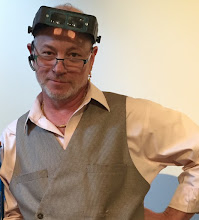
Earlier this year my wife and I celebrated our 20th wedding anniversary (well actually late last year but we didn't celebrate it until this year). We went to our favorite state (other than where we live) in the nation and headed back out to California for a 5 day stay at an inn in Big Sur, Ventana where we have spent many significant moments in our life together and 5 days in San Francisco. Last year there was a significant forest fire in Big Sur that came up to the Inn's doorstep and coincidentally (but not because of the forest fire) their restaurant burned down shortly after the big fires.
We had some trepidation about returning this year because of this but ultimately the draw for us of going back to the place where I had proposed to my wife and where we spent our honeymoon was just too strong. Interestingly the least exciting part of our stays at Ventana in the past were the restaurant. While it's location was stunning, sitting out on the deck eating lunch looking at the mountains to the left and the Pacific Ocean in front of you was always a memorable experience, and it had a very nice bar, the food was, well, like hotel food. Mind you there was nothing wrong with it. There just wasn't anything (especially for a foodie like me) very special about it either. Consequently Kathy and I were prepared for the worst, as the Inn had moved a small kitchen into their main building where their offices are located and set up a small dining room there as well for hotel guests only. One of the things I find so relaxing about the Inn is that there really isn't much to do there so the idea that we might have to drive out somewhere else every night to eat (especially on the winding Coast Road after starting the cocktail hour early) was NOT something I was looking forward to.
You may be asking by now what this all has to do with jewelry but bear with me. There are a number of points I'm getting to but you have to hear the whole story behind it first.
Upon our arrival, after a 5 1/2 hour plane flight, and a 3 1/2 hour drive from the San Francisco airport, through mist and fog, the last thing we wanted to do after checking into our room was to get back in the car and drive somewhere for dinner, so we headed over to the main building to see what they had done about the restaurant situation. They had set up a formal dining room area and off to the side, right next to the what was now the door to the kitchen (formerly the office door) they had set up a 4 seat bar. Since Kathy and I both prefer to sit, and eat, at bars we plopped ourselves down there and settled in. We were presented with menus that were short (4 appetizers, 4 mains) but that certainly didn't look anything like the former restaurant's menu.
The food, as it turned out was simply amazing. It utilized completely different ingredients (although there was a nod to the fact that it was still a hotel restaurant with a meat and a fish dish), was flavorful, unique, amazingly well presented and just downright delicious. Now because of our seats at the bar, we were kind of in the middle of the action as everything went by us on the way in or out of the kitchen and we could see through the window on the door what was happening in the kitchen as well. We were befuddled by how such a tiny (and I mean tiny) kitchen could be producing food of this quality but we were thrilled to know that we wouldn't have to be making daily trips out to eat elsewhere.
I can't remember if we actually met the chef on the first night we were there (although I believe we did and complimented him then) but on our second night, after yet another fantastic meal, he came out, introduced himself to us and we had a very pleasant conversation. His name is Philippe Breneman and he had been brought in by the hotel group that now manages Ventana to get the temporary restaurant set up and running while he was waiting for the restaurant at another inn they manage in Santa Cruz to be built, as that was going to be his restaurant. In the course of the conversation, I mentioned that we were there for five nights and the menu was a little short for our stay given some of our food preferences. He almost immediately offered to make us a five course prix fixe meal for the next night that would allow us to have some things that weren't on the menu. Every single dish he brought out for the five course meal was a masterpiece of attention to detail, flavor and sight. He personally brought out each plate and talked about the food and how it fit into the theme he had come up with for the meal. Although he used many of the main ingredients that were on the regular menu, he presented them all in a completely different format. This was, if not the best meal I've ever had, one of the top two or three meals I have ever had in my life (and we eat out a lot). We were also the only people in the restaurant the meal was prepared for.
As our stay continued we spent more time with Philippe learning something about each other's lives and he continued to treat us with service that was far and above anything that was asked of him. Now I have a number of local chefs who are friends and quite a few more where we are regulars and are somewhat known by the staff, but I have never had an experience like this.
Okay, okay, so what's my point? There are two actually. The first is that, at Daniel R. Spirer Jewelers I try to treat my customers the same way that Philippe treated us. It is important for anyone who is taking care of the public to do just that. Take care of your customers. I try to do that myself by listening to my customers about what it is they want and why they want it. I try to learn something about them so that when I make them a piece (especially a custom one) I am making something that has meaning to them. I like to think of myself as being here to make my customers happy. I'm not just selling a piece of jewelry; I'm more often selling something that has huge meaning to the people who are going to wear it. In over 25 years in my store I have created thousands of wedding bands for people and every day I am continuing to be a part of their lives. You may not remember where you bought a car or an air conditioner twenty five years ago, but you do remember where you got your wedding bands.
So here's the second point: A few months ago I got an email from a woman (Sara) who said that she was Philippe's fiancee and that they were getting married soon and that Philippe had insisted that I make the band for him. I was thrilled by this both because I had obviously made a new friend, but also because someone who had never actually been in my store (and it is different to see something on line than to actually come in) had felt so strongly about me that they wanted me to participate in such a significant event in their lives.
We had many emails back and forth trying to come up with a design that would make both Philippe and Sara happy and that I could produce for them in their price range. Pictures of different pieces went back and forth. Different ideas flowed throughout the process. But foremost in my mind throughout the process was who Philippe himself was and how he had treated us. How could I not at least attempt to make him something that would impart at least some amount of the pleasure for him that he had created for us, for such an important time of his life?
We finally arrived at a band that would utilize my 18k palladium white gold (a metal with a distinctly greyer tone than most commercial white golds) in the center with platinum (a distinctly whiter metal) on the sides, a row of eight flush set diamonds in the center with the grey toned white gold sandblasted and the platinum on the sides high polished. This band was completely hand fabricated, utilizing metal from my supplier who provides me with recycled gold and platinum, and after about another two weeks I had it ready to go.
Last week I shipped it out to Sara. Of course, then the nail biting stage starts. Did I do what they wanted? Will they like it? Will it fit (in this case a big question because there really isn't any good way to size the band)? So I waited and wondered for a few days. Yesterday I got a call from Philippe (the first I had talked to him since the whole process started) who was thrilled with it. He wants to start wearing it right away but Sara won't allow it (although she said to me in an email: "By the way, it is at our house, hidden away, but he keeps sneaking peeks at it and trying it on!") Now THIS is why I make jewelry. And this, as I said in an earlier posting on custom work, is why you should look for a jeweler who will listen to you. Someone can have the most wonderful skills in the world, but if they don't want to see who you are, they won't be able to make something that is right for you.
As for Philippe, he is currently running his restaurant called Aquarius in Santa Cruz. Anyone reading this who is on the West Coast should absolutely make a trip to his restaurant. I can't guarantee you'll get your own personalized five course meal, but I can guarantee you'll have an absolutely wonderful one.
Because of my marginal photography skills I did not take a picture of Philippe's ring, but I am making one up for the cases (if you're in, just ask to see the "Philippe ring") and I hope to get a picture of that once it is made up (that I will post here) and I have one of my photography assistants in for a round of picture taking.
My next posting wil be "Why I'm in This Business II" and should be up much sooner than this one came out.
Tuesday, September 22, 2009


Friday, September 4, 2009
Custom Work III

This will be my final posting on custom work for the moment and it has to do more with the job/role the customer has to play in this situation. At Daniel R. Spirer Jewelers I really try very hard to please my customers and work with them regardless of the limitations (within reason). If my starting custom price is too high, I will try to work with the customer in using an existing design, perhaps with other stones in it or a minor modification. If time frame is an issue, I will do my best to work with you on that as well, but there are certain things that are beyond my control.
Having been in business for so long, I have seen many changes in the way business is conducted. In particular, over the last 10 years, since the widespread use of the Internet began, there has developed a mindset about how quickly things can be done. Say you want a book that just came out. Well, you can go to Amazon, or one of the other online booksellers, find it, click a couple of buttons, and voila!! two days later the book is in your hands. Unfortunately this kind of "click and it's done" mentality has spread widely and seems to now encompass all fields of work.
I like to play computer games and a year or so ago I needed a new computer. I went online and found a place that specialized in putting together custom gaming computers. I was able to order exactly what I wanted, and they built the computer up to my specifications and it took about three weeks to get it. Interestingly, while reading their reviews on line, the thing that other customers complained about the most was how long it took to get the computer. Now, none of this company's product was off the shelf set ups. But very few of the purchasers could grasp the concept that when an individual had to actually hand build the unit they wanted, it would take some time to actually produce it. Given that we were dealing with gaming computers, I was pretty sure that the majority of purchasers were fairly young and that they had been raised in the computer age.
So how does this relate to jewelry? Well for one thing, while there have been some advances in the use of cad/cam computer designing, and there have certainly been huge advances in the understanding of metallurgy allowing for the development of far more alloys than ever seen before (because of computers), making jewelry can still be a pretty labor intensive field. It is especially so when you are working with someone like me. I would much rather hand build a piece than cast it. There is simply more of "me" in the final product and I can guarantee that I am using recycled metals. But when I do have to cast a piece (and some pieces simply need to be built that way) there is time needed for building a model, having my casters make a mold and cast the model, and then for me to do whatever finish work/stone setting, etc. that is necessary. When working on cad/cam pieces, I need to develop a design, attempt to translate it to my cad/cam person who then needs time to do their work, get a wax cast up, and then have my casters cast the piece and still do the finish work. All of these elements add time to the process. And all of them assume that the first model/wax/piece is what you, the customer, actually wants. If the first model isn't right then I need time to make the second or third. If not enough time is left for making a design, then there often isn't time at the end of the process to make alterations, or correct misunderstandings, in time for the final product to be used.
While I can produce many of my existing designs in relatively short periods of time, true custom work (i.e.: I want you to make this exact pattern of oak leaves all around my ring) takes time and the more a jeweler has, the better chance that, you, the customer will get exactly what you want. Four to eight weeks is usually a reasonable time period for true custom work. Yes it can be done quicker, but the results won't always be the same. It is important that you try to plan ahead on this type of job. And remember that the reason you're coming to someone like me is because you don't want something that looks like it was made by a machine!
The pendant pictured above was a custom piece made using a customer's marquis shaped diamond in 18k yellow gold.
Thursday, August 20, 2009
Custom Work II

The follow up to the last posting on custom jewelry design is what should you, as a customer, expect from the jeweler. True custom work can be a tricky business. Often a customer will think they are explaining themselves clearly about what they would like to see in a design but the jeweler is hearing something entirely different. Individual jewelers will also put more, or less, of themselves into the process impacting what the final result is. Sometimes the customer, not being a designer themselves, will have absolutely no clear way to describe what they want and this leaves a lot up to the interpretation of the jeweler.
Personally I want my customers to be happy with the final result. I want this for a couple of reasons. The first is that it is just in my nature. The second is that if the customer isn't happy with the piece then they won't wear it. If they don't wear it, no one else sees it and no one can ask them where they got it. It doesn't do anyone any good if a beautiful piece of jewelry ends up stashed in a drawer somewhere gathering dust. I'm not a big believer in owning something you'll get absolutely no use from.
As a customer you should find out FIRST what the jeweler's policy is on custom work. Will they redo the job if you don't like it? Do they show you drawings, models, computer renderings, etc. first? What will happen if they can't make a piece you're happy with? Personally I'm not a sketch artist so I don't do drawings. But I do show the customer a model of the piece in metal (usually, although sometimes it will be in a wax) so they can see what the final result will look like. I find this works better than any other method because the customer can actually try on the piece and see how it appears on their finger. Sometimes drawings or computer renderings of rings don't accurately reflect how it's going to look on YOUR finger. Ultimately, it's going to be on your hand, not on a flat piece of paper. I also offer to make up to three models without an additional charge. Over this I may add extra charges, but usually this is only if the customer has changed directions entirely and it isn't just some minor modifications of the design.

You should also ask around, or check some of the places where reviews are written (Yelp, etc.) to see if anyone has had any experiences with the jeweler you've chosen. While it isn't possible to make every single customer happy, the majority of what you hear should be on the positive side. This however is no guarantee that your taste will coincide with the taste of the jeweler, or the other reviewers. (Try reading restaurant reviews on line sometime for a few places you've been to and liked. Some people will love the food, some will hate it, and some will think it's mediocre. Everyone has different tastes.) If you don't like the way the work in the shop looks, you could probably assume that you aren't going to get something made that you're happy with. You also want to watch for these things when working with a jeweler: Are they actually listening to what you are saying? Do you feel comfortable with the jeweler? Do you feel confident in their abilities? Are they looking at the practical nature of what you want (i.e. do they warn you when the design you want will be too fragile, or the stone you want might be damaged in the way you want to wear it)? If you answer no to any of these questions, then I would always recommend you look elsewhere. A jeweler who might be a great match with one person might not be with another.

The picture at the top of the posting is a custom piece for a regular customer for whom the three aquamarines held some significance. If my memory serves me right there was also supposed to be a certain number of wires on the piece to represent something else. She knew that she wanted something with the three stones, the particular number of wires, and an irregular shape, but she wanted me to do something that was consistent with my usual look.
The two pictures posted in the middle and bottom of this post were of an aquamarine and diamond engagement ring. In this case the customer knew he wanted an antique looking ring and the general idea was pulled from pictures of antique rings. The specific lines were worked out by me and a computer design program was used in conjunction with this.
Thursday, August 13, 2009
Custom Work

What exactly is custom work? Unfortunately many jewelers (especially more traditional ones) seem to think that picking something out of a catalog from one of their suppliers and sticking your stone (or one you're purchasing from them) into it is custom work. In my book, however, custom work means creating a new design for the customer. If you come into my shop and see a piece I have made and say "That's lovely but I really want it with one of those natural color fine blue sapphires you have" that isn't custom work as it's just using an existing concept. On the other hand if you come in and say I want that design with a sapphire but I want you to change the way all of these wires are placed, that IS custom work. Or if you come in to me and say I want you to build an octagonally shaped design that measures 2" across and has a diamond set in the middle for earrings, that would be custom work.
I have been doing true custom work for 25 years and I have covered the full gamut of possibilities. I have set pieces of the Berlin Wall, rocks from the top of Mt. Everest, human teeth, canine teeth, metal pieces that were removed from healed human bone material, tyrannosaurus rex teeth, shells, found rocks, etc. I have worked on designs that customers have brought me sketched on pieces of tissue, done in fine detail on a computer program, or that they have dreamed of and relate to me verbally. I have worked on pieces that have meaning for people in some way or another, whether it be a mountain range they are fond of (Mt. Monadnock, the Grand Tetons, the Adirondack), ocean scenes, and even a tree that someone grew up with.
Custom work can be both challenging and interesting. It often requires me to stretch my skills to new levels. By far and away the stuff I have the most fun with, however, is the work that I do based on what I have out in the case, especially when the customer allows me to just go with the flow. The piece pictured here is one I recently finished that utilized a customer's tanzanite and assorted diamonds.
Next blog: More on custom work.
Tuesday, August 4, 2009
Heat Treatment of Sapphires

The question that surrounds the entire issue of heat treatment of sapphires (or other gem materials) is: "What should I buy?" Personally I believe that if you see a stone you like and that the treatment is within the norms (i.e. heating as opposed to diffusion or dyeing) you should buy it. While it is nice to be able to say that your stone is completely natural, the fact of the matter is that man plays a role in the entire process whether treated or not. The stones are mined by man and cut to achieve their maximum beauty by man. If you want something completely natural you could always get a sapphire crystal, but most of them are really pretty ugly. I have given Kathy, my wife, both natural and heated sapphires. My concern is that the stone be beautiful, well cut and pleasing to the eye. The rest of it is moot. I don't want to own an ugly stone just because it hasn't been heated.
Years ago there was very little difference in the price between natural and heated sapphires. The general public had very little knowledge of what was being done to stones before they reached a retailer. Today, thanks to organizations like the AGTA and forward thinking retailers like myself and larger firms like Tiffany's, the public has been given the right to know what is being done to their stones. This has, in fact, led to a premium (in some cases a significant one) being placed on stones that can be proven to be natural color.
Unfortunately, there are still far too many jewelers out there who either don't understand what is being done themselves, or don't care about informing their customers (in some cases illegally). The FTC states that treatment of gem materials MUST be disclosed if the lack of treatment results in a significant price difference. Regrettably they don't define "significant" but a good lawyer could argue that even a 5% difference could be construed as that. Technically what this means is that fine sapphire that has been heated will need to be disclosed but tanzanite treatment would not (because ALL tanzanite that comes on the market has been heated). Personally, however, I have always believed that ALL treatments should be disclosed as the public has the right to know exactly what they are getting and acted accordingly.
So to answer the question posed at the beginning of this post, buy what you like! Just make sure that you are informed about what it is you are actually buying.
Pictured above: Natural color sapphire.
Subscribe to:
Posts (Atom)